Search


 www.google.com





Budgeting - Needs vs. Wants Article
 While some people have a lot of money and some people have less, we all have a limited amount of money and a budget helps us to make the most of what we have. Budgets are especially useful when we have less money and are struggling to make ends meet. A budget will help to identify where you are spending your money and places where you can be more efficient with your money.
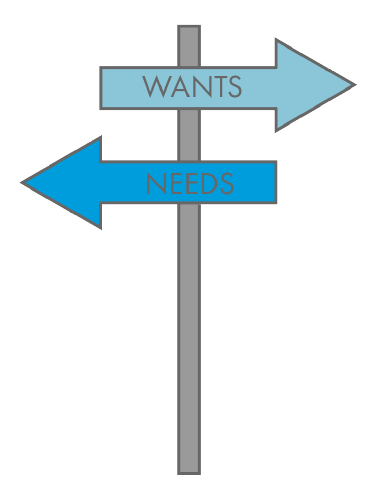
When you sit down to create your budget, it will be important for you to be able to identify your needs and your wants.
Needs
Needs are things you can’t live without such as food and a place to live. They can also be things you need for your work since, without work, you won’t have any money to budget! Some examples of needs are: food, rent or mortgage, utility bills, insurance, health care and medication, and work expenses such as a uniform or transportation. These expenses are the foundation of your budget and, most often, take up the largest portion of your income.
Wants
Wants are things that you could live without but that help you to live more comfortably. Some examples of wants are travel, gym memberships, dining out, entertainment, electronics, new clothing, home purchases, and streaming accounts. Wants aren’t unimportant or bad… they may provide benefits such as helping us keep in touch with others or maintain a healthy outlook on life. The difference is that they aren’t essential to our survival.
Needs vs. Wants
Determining whether something is a need or a want can sound like a simple thing to do but it’s not always as straightforward as it might seem. For example, while food is a need, buying organic food or eating out would be a want. There are several factors that can impact whether an expense is a need or a want.
One factor is the intended use of the item. Determining whether your new computer is a need or a want comes down to how you plan to use it… if you need it for work, then it’s probably a need. If you just plan to use it to play video games and surf the internet, then it’s probably a want.
Another factor comes down to choosing between a variety of available levels. For example, having a mobile phone to communicate with family and friends, make appointments, etc. could be considered a need. However, choosing the newest smartphone over a basic model cell phone would push it into the category of a want.
There can also be a mix of needs and wants within a category. Take groceries, for example. While food is a need, not all food is necessary for our survival. When you buy your groceries, you may pick up some vegetables, grains, proteins and dairy which could be considered needs. However, you might also pick up some potato chips and ice cream which would fall into the want category.
Savings and Debt Repayment
It can also be difficult to decide whether saving money is a need or a want. It’s easy to see it as an extra expense that isn’t required for your immediate survival like food and shelter are and especially when money is tight, it is easy to put off saving for another time. However, saving for retirement or an emergency or to pay off debts can be seen as an investment into paying for your future needs. While buying a new stove isn’t a need if your old one is working fine, buying a new stove when the old one stops working suddenly makes it a need. So, saving money should be considered a need.
And, while paying off your debt as quickly as possible doesn’t seem urgent or necessary for your survival, it does affect your long-term overall quality of life and well-being. Paying interest on money you’ve borrowed is a constant drain on your finances and can affect your ability to pay for your needs down the road. And so paying off debt should also be considered a need.
How to handle wants and needs when budgeting
Once you’ve identified your wants and your needs, you can begin to make your budget. You will want to make sure you budget for all of your needs first. Once you have those covered, you can begin to go through and prioritize your wants and begin to budget your money for the wants that are important to you. Remember, it’s not bad to have wants. However, you will need to look at them carefully and make some choices. Which wants can you afford and which ones are unaffordable? Which ones are most important to you and which ones aren’t as important? If you choose one want over another, how does that affect your budget?
50/30/20 Budget Rule
A popular budgeting concept is called the 50/30/20 Budget Rule. This rule states that when you budget, you set aside 50% of your income for your needs, 30% of your income for your wants and 20% of your budget for your savings and debt repayment. While this is a helpful place to start, no one budget method will suit all people and lifestyles. You may need to adjust the percentages based on your own income and situation. The important thing is to find a balance that works for you. Be flexible and allow yourself to go back and re-evaluate your budget regularly to find which areas are working and which ones aren’t.
Budgeting - Needs vs. Wants Presentation Resources